
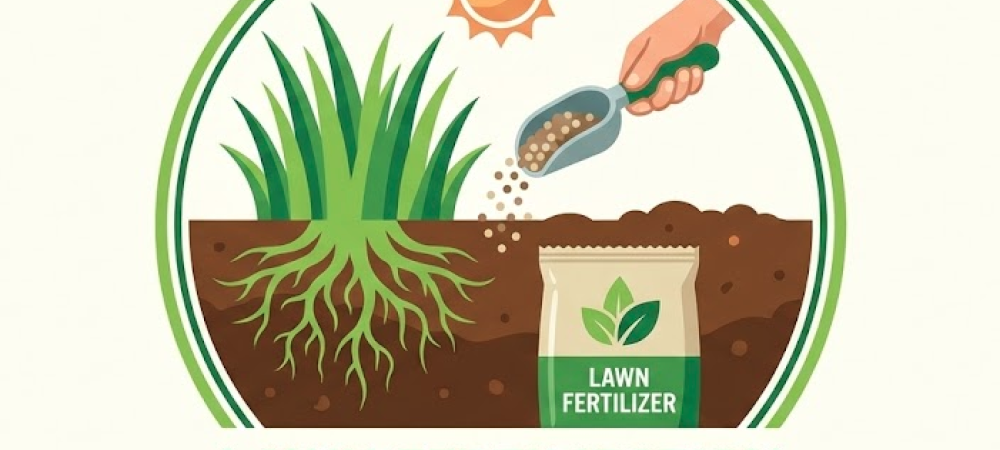
The Truth About Early Spring Fertilization: Why Timing Matters More Than You Think
Early spring feels like the perfect time to “wake up” your lawn with fertilizer, but feeding too soon in Alabama, Georgia, or South Carolina can actually weaken warm-season turf. When you match fertilizer timing to your grass type and real growth, you get thicker roots, better color, and fewer weed and disease problems all year.
The Quick Answer
In the Southeast, fertilizing warm-season lawns too early in spring can reduce root growth and waste nutrients while weeds take advantage. For Bermuda, Zoysia, Centipede, and St. Augustine, it is usually best to wait until the lawn has greened up and is actively growing, typically from late April through early summer, rather than applying fertilizer at the first warm spell.
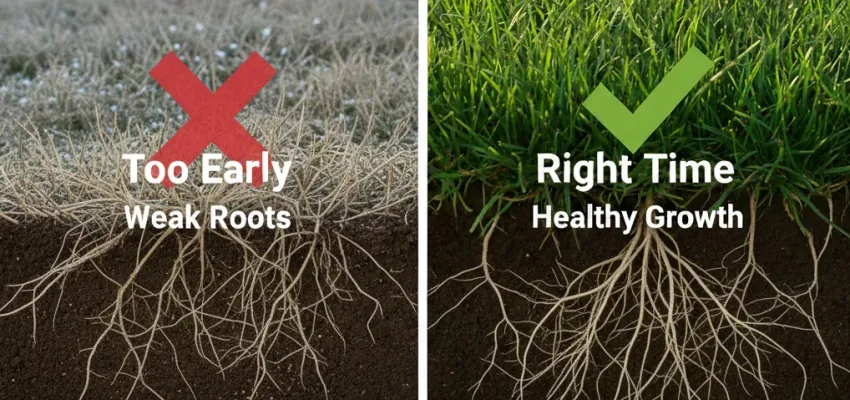
Why Early Spring Fertilization Can Backfire
Warm-season grasses common in Alabama, Georgia, and South Carolina are built to thrive in heat, not late-winter and early-spring swings. When fertilizer goes down before the lawn is ready, the results can be the opposite of what homeowners expect.
- Roots, not blades, should receive first priority; excessive nitrogen applied too early promotes top growth while root systems are still developing.
- Shallow roots struggle in summer heat and drought, leaving lawns more prone to stress, weeds, and disease.
Alabama Cooperative Extension notes that warm-season turfgrasses should be fertilized during the summer when they grow most rapidly, and that fertilizing them too early in spring can reduce root growth and stress the lawn. That kind of stress shows up months later when your grass should be at its strongest.
What Really Controls the Right Timing
In the Southeast, the optimal fertilization timing depends on grass type, soil temperature, and the extent of green-up. Treating all lawns the same according to the calendar is one of the primary reasons early-spring fertilization fails.
- Most Unlimited Lawn Care™ customers have warm-season grasses such as Bermuda, Zoysia, Centipede, or St. Augustine, which require fertilizer applied from late spring through summer once the soil is warm.
- Cool-season lawns (such as tall fescue in shaded or transitional areas) follow a different calendar and usually receive more feeding in fall and early spring, rather than during the heat of summer.
University of Georgia Extension advises starting fertilization for warm-season grasses around the time the soil at 4 inches reaches about 65°F and the lawn is noticeably green and growing. That usually aligns with late April or May in much of Georgia, not with the first warm days in March.
How to Time Spring Fertilization the Right Way (Step-By-Step)
Before you consider timing or products, confirm the exact type of grass you’re working with so the rest of your spring fertilization plan fits your lawn.
1. Confirm your grass type
Before touching the spreader, identify what is actually growing in your yard.
- Bermudagrass often looks fine-textured and recovers quickly from traffic.
- Zoysia has a dense, carpet-like feel that can handle heat but greens a bit later.
- Centipedegrass has a lighter green color and needs less fertilizer overall.
- St. Augustine has broad blades and is common in some coastal and shaded areas.
If you are unsure, a local lawn care professional can quickly identify your turf and set the right schedule.
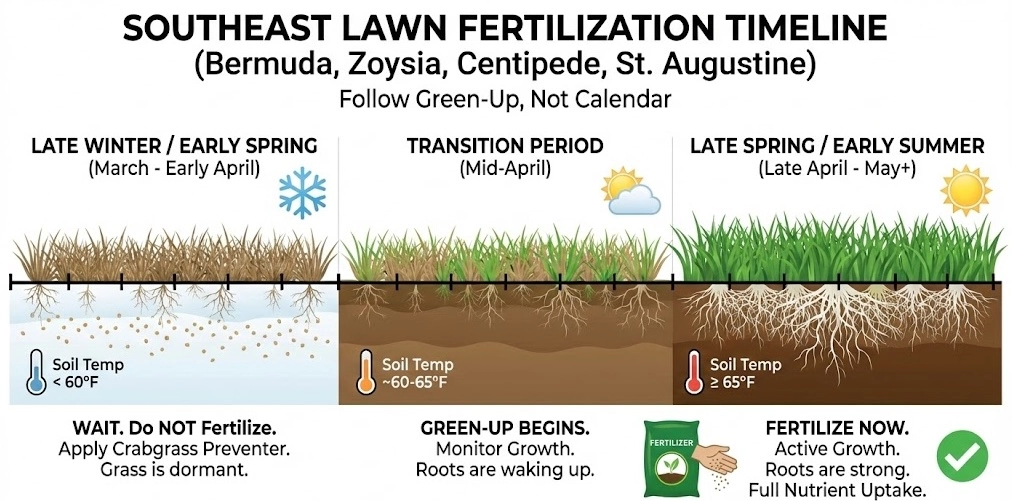
2. Watch the green-up, not the calendar
Instead of fertilizing on March 1 just because it “feels like spring,” watch how your lawn looks and grows.
- For warm-season lawns, wait until at least half of the yard has turned green and you have mowed a couple of times.
- Soil temperatures should be consistently above 60–65°F at a depth of a few inches before you apply nitrogen.
Georgia-focused guidance emphasizes applying fertilizer after the grass begins greening, not before, especially for Bermuda and Zoysia lawns. This simple shift prevents you from feeding cold, dormant roots that are not ready to use nutrients.
3. Separate crabgrass control from heavy feeding
Homeowners in Alabama, Georgia, and South Carolina often reach for “weed and feed” products in early spring, but the ideal timing for crabgrass preventer and fertilizer is not always the same.
- Pre-emergent herbicides are applied early to prevent weeds such as crabgrass from emerging.
- Heavy nitrogen fertilization is best reserved for turf that is fully awake and growing, not still emerging from dormancy.
When possible, use a pre-emergent that is not overloaded with nitrogen, or let a professional program handle the balance of weed control and feeding so you are not locked into one date for both.
4. Follow Southeastern timing windows, not generic advice
Regional schedules matter more than national one-size-fits-all charts.
- Alabama Cooperative Extension explains that warm-season grasses should be fertilized during the summer, when they grow most rapidly, and warns against fertilizing them too early in spring because this can reduce root growth.
- Georgia lawn guidance emphasizes initiating fertilization after warm-season grasses begin greening and soil temperatures rise, typically from late April through May for Bermuda and Zoysia.
- South Carolina-focused schedules indicate that most fertilization for warm-season lawns occurs from mid-spring through summer, again once growth is in full swing.
These windows all point to the same truth: in the Southeast, “too early” might look like March or early April for warm-season lawns, even if the air feels like spring.
5. Match the product and rate to your lawn
Once timing is set, the next step is to choose a fertilizer that suits your grass and apply it correctly.
- Use a spreader for even coverage, and follow label rates to avoid burn and runoff.
- Many Georgia and Carolina guides suggest slow-release nitrogen to provide steady feeding through the growing season.
- Centipedegrass and some low-input lawns need much less fertilizer than Bermuda or Zoysia; more nitrogen is not always better.
Testing your soil through your local Extension office gives a clearer picture of nutrient needs, helping you avoid guesswork and unnecessary products.
Options: Early Green-Up vs. Delayed Feeding
Homeowners often face a choice: push for fast green color as early as possible, or wait for stronger roots and longer-term health. Each path has pros and cons for AL/GA/SC lawns.
Early “color-first” spring fertilization:
- Pros:
- Quicker early green-up when you are eager to see color after winter.
- It can help a recovering lawn very lightly when used under professional guidance at low rates.
- Cons:
- Risks of feeding weeds and shallow root growth instead of building deeper roots.
- Increases the chances of summer stress and disease when heat and humidity rise.
Delayed or “grow-strong-first” fertilization:
- Pros:
- Encourages deeper root systems that better withstand summer heat, drought, and traffic.
- Lines up fertilizer with the peak growth period of warm-season grasses.
- Cons:
- The lawn may stay tan or patchy a little longer into spring before it fully greens.
- Requires patience and planning instead of reacting to the first warm weekend.
For most warm-season lawns in Alabama, Georgia, and South Carolina, the delayed, growth-aligned approach delivers better results throughout the season, even if it delays the early pop of color by a few weeks.
Prevention Tips for Long-Term Lawn Health
Instead of depending on early fertilizer for a quick fix, build a routine that keeps your lawn thick and resilient.
- Mow at the recommended height for your grass type to shade the soil and reduce weeds.
- Water deeply and less often, rather than frequently, light watering to promote deep roots.
- Handle thatch, leaves, and debris so sunlight and warmth reach the soil evenly in spring.
- Overseed or plug thin areas at the right time for your grass type and region.
- Use soil tests every few years to guide fertilizer and lime applications, rather than relying on guesswork.
- Follow a regional fertilization calendar, focusing most feeding on the true growing season instead of forcing growth early.
These habits reduce your reliance on “rescue” applications and make each correctly timed application more effective.
When to Call Lawn Care Professionals in AL, GA, or SC
If you are unsure about grass type, timing, or products, letting a local lawn care company manage your fertilization is often safer and more effective than trial and error. Unlimited Lawn Care™ can design a fertilization and weed control schedule tailored to warm-season lawns in Alabama, Georgia, and South Carolina, so you never have to guess when “early” becomes “too early.”
Consider reaching out when:
- Your lawn stays thin, patchy, or full of crabgrass and other spring weeds.
- You have fertilized before and experienced burned spots, disease, or summer dieback.
- You are unsure how local weather patterns and soil types across AL, GA, and SC should shape your schedule.
Professional lawn fertilization and weed control, along with a season-long lawn care program in Alabama, Georgia, and South Carolina, is just a click away on Unlimited Lawn Care™'s lawn fertilization pages, making it easy to move from learning about timing to getting a tailored plan for your yard.
Healthy Spring Lawns Start with Smart Timing
Early spring fertilization sounds helpful, but in warm-season lawns across Alabama, Georgia, and South Carolina, it often feeds the lawn at the wrong time and sets up summertime problems. When you wait for true green-up, follow regional timing windows, and use the right product and rate, your lawn rewards you with stronger roots, thicker growth, and color that lasts beyond early spring.
To avoid timing mistakes and guesswork, schedule your spring lawn evaluation with Unlimited Lawn Care™ today, or request a custom fertilization plan for your lawn in Alabama, Georgia, or South Carolina. Connect with our lawn care team to get a fertilization and weed-control program tailored to your yard.
Sources:
- “Home Lawn Maintenance.” Alabama Cooperative Extension System, 10 July 2025, Auburn University, https://www.aces.edu/blog/topics/lawn-garden/home-lawn-maintenance/.
- “Fertilizing Your Lawn in South Georgia: What You Need to Know.” UGA Extension – Evans County Agriculture Blog, 13 Apr. 2025, University of Georgia, https://site.extension.uga.edu/evansag/2025/04/fertilizing-your-lawn-in-south-georgia-what-you-need-to-know/